Yilkari Industrial Park

Yilkari Industrial Park

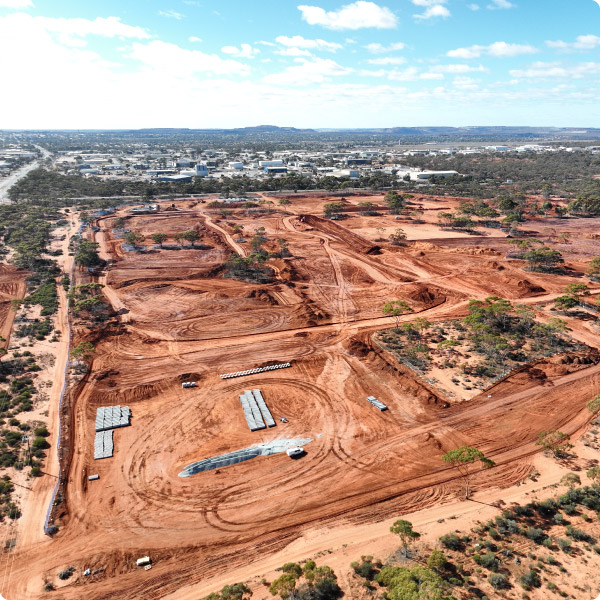
Yilkari Industrial Park is a regionally significant industrial estate designed to support long term economic growth in the Kalgoorlie Boulder region. Strategically located on the western edge of the city, the estate will deliver more than 120 general industry lots across approximately 187 hectares, providing development ready land to meet strong demand for modern industrial facilities. The project reflects DevelopmentWA’s commitment to planning high quality, efficient industrial precincts that meet the needs of industry while supporting community and environmental outcomes.

Sustainability is embedded throughout the estate via its alignment with EnviroDevelopment certification, supported by comprehensive Design Guidelines covering climate‑responsive design, energy efficiency, renewable energy, waterwise irrigation, and waste reduction. Mandatory requirements include WELS‑rated water‑efficient fixtures, Department of Health‑approved Secondary Treatment Wastewater Systems, and integrated waterwise irrigation delivering 100% reuse of onsite treated wastewater for landscaping and tree establishment. This approach is particularly innovative given the region’s arid desert climate, absence of groundwater, and reliance on scheme water, which is pumped 600km from the Perth Hills.

Energy initiatives further strengthen environmental performance, mandating a minimum 6.6kW solar PV (photovoltaic) system for every development, with best‑practice recommendations for expanded PV and battery storage. Independent modelling shows this combination can reduce emissions by up to 19%, and further reductions are achieved through design measures such as light‑coloured roofs, high‑performance glazing and effective shading.

Environmental protection measures ensure the estate delivers an ecological net gain, including retention of Priority 1 flora, revegetation using local seed mixes, fauna‑sensitive clearing practices, and topsoil conservation. Waste management requirements ensure at least 80% of construction and land‑clearing material is reused or recycled, including vegetative debris processed onsite into mulch to support landscaping.

The project’s sustainability focus is strengthened by a community education program, using design guidelines, factsheets, and interpretive materials to communicate waste hierarchy principles, water and energy efficiency, and the use of environmentally responsible materials.

Extensive engagement with State Government agencies, the City of Kalgoorlie‑Boulder, industry stakeholders and local First Nations representatives has informed planning, ensuring the estate responds to market needs, cultural values and environmental sensitivities. “Yilkari Industrial Park demonstrates DevelopmentWA’s commitment to delivering industrial land that is resilient, efficient and environmentally responsible. EnviroDevelopment certification provides a clear and trusted framework that ensures sustainability remains central to every stage of the project,” said DevelopmentWA Development Director Breanne Chrimes.

Project details

Developer: DevelopmentWA

Development type: Industrial

State: Western Australia

Certification period: 2025 –

Certification:

Related projects

Find out more about EnviroDevelopment Projects in your State.

Botania Park

Botania Park

Botania Park is a new residential development set to deliver approximately 1,000 homes in the Perth suburb of Mariginiup, situated between Lake Mariginiup and Lake Jandabup approximately 40km north of the city centre. The project has proudly achieved 6 Leaf EnviroDevelopment certification.

Ecosystems

The design of Botania Park has been tailored to the existing site, successfully realising a vision to retain more than 50% of the trees on site. This effort is complemented by streetscape designs that reduce paved surfaces and increase space for plantings, forming a strong component of the 30% tree canopy targeted across streets and parks. The stormwater management system has been optimised to provide treated runoff to the surrounding wetlands, with the aim of restoring their ecological integrity.

Waste

Hesperia have implemented rigorous waste management practices, targeting a minimum of 90% diversion of demolition and construction waste. This is verified through a system of monthly waste reporting.

Energy

Botania Park is without reticulated gas and provides support for all-electric living. Hesperia offers every resident a rebate towards all-electric appliances, as well as a separate rebate for the installation of solar and battery systems.

Materials

Our goal is to achieve a 20% reduction in Upfront Embodied Carbon through the use of low-carbon construction methods and materials, such as the low-carbon concrete used in kerbs. We also offset 100% of the remaining Upfront Embodied Carbon to further reduce the development’s environmental footprint.

Water

Water Sensitive Urban Design (WSUD) principles are embedded in the project via the use of rain gardens to naturally treat stormwater and provide natural water flows into the landscape. Hesperia use bore water for construction and the irrigation of parks and streets to significantly reduce reliance on the mains water supply. Furthermore, the Design Guidelines require the use of efficient WELS rated fittings and fixtures, and dual-plumbing to facilitate rainwater use.

Community

A Community Development Plan is in place to implement actions, such as events, that are designed to increase community interaction and a sense of belonging. Hesperia undertook a comprehensive Aboriginal Engagement process, including meetings with Traditional Owners for input into the concept design, which will see an Aboriginal Heritage inspired playspace paying homage to the rich cultural history of the area. Finally, streets have been designed as ‘little parks’ to provide more spaces for residents to interact.


Hesperia is proud to have received the 6-Leaf EnviroDevelopment certification; a significant achievement that helps communicate our commitment to responsible development for people, place, and the planet. It will remain a guiding standard as the Botania Park community continues to grow.

Project details

Developer: Hesperia

Development type: Residential Subdivision

State: Western Australia

Certification period: 2025 –

Certification:

Related projects

Find out more about EnviroDevelopment Projects in your State.

Ocean Reef Marina

Ocean Reef Marina

Raising the bar for sustainable coastal development

DevelopmentWA’s Ocean Reef Marina has set a new national benchmark in sustainable development, becoming the first marina development in Australia to achieve EnviroDevelopment certification at the highest level across all six categories: ecosystems, waste, water, energy, materials, and community.

Located on Perth’s northern coastline, Ocean Reef Marina is transforming a former boat harbour into a vibrant, world-class coastal destination. Upon completion, the development aims to deliver more than 1,000 new homes, 12,000 square metres of retail and commercial space, and over five hectares of public amenities – including Perth’s first metropolitan coastal pool and a family-friendly beach.

Sustainability has been embedded in the development from the outset, with innovative measures aimed at reducing environmental impact while enhancing community outcomes. A standout initiative is the integration of a renewable energy microgrid, operated by Ocean Reef Renewable Energy (a Zenith Energy company). This system will reduce energy bills by up to 30 per cent for future residents and businesses while supporting greater energy resilience.

Smart city technologies and sustainable construction practices further reinforce the development’s sustainability credentials. . More than 80 per cent of construction waste is being diverted from landfill, with recycled materials used in roads, car parks, drainage and more. The project also prioritises native landscaping and urban greening to support local biodiversity and improve urban cooling.

The EnviroDevelopment certification, independently awarded by the Urban Development Institute of Australia, recognises excellence in sustainable design and construction. In achieving full certification across all six categories affirms DevelopmentWA’s commitment to delivering leading-edge projects that protect the environment, support communities, and set new standards for sustainable urban development.

“We’re incredibly proud to be delivering the first marina in Australia to achieve full EnviroDevelopment certification. This milestone reflects our focus on innovation and long-term sustainability — not just for the environment, but for the people who will live, work and visit Ocean Reef Marina,” Dean Mudford, DevelopmentWA CEO.

In late 2026, key public amenity is anticipated to open to the public, including the protected family beach and beach playground. Ocean Reef Marina is on track to become a thriving, sustainable hub for tourism, recreation and coastal living.

For more details, visit https://oceanreefmarinawa.com/.

 

Project details

Developer: DevelopmentWA

Development type: Mixed Use

State: Western Australia

Certification period: 2024 –

Certification:

Related projects

Find out more about EnviroDevelopment Projects in your State.

Hazelmere Interchange

Hazelmere Interchange

Hazelmere Interchange (the Project) is a 33-hectare industrial estate located approximately 7-kilometres from Perth Airport, making it a prime location for logistics growth in Western Australia. The Project will comprise of several warehouse sites housing a variety of logistics and manufacturing businesses, bringing significant economic growth to the Hazelmere area. Construction of the first two warehouses was completed in 2014, with several warehouses in active construction.

The Project received a 6 Leaf EnviroDevelopment certification, providing recognition of how sustainability has been incorporated into planning, design, construction, and operations.

A summary of the key sustainability initiatives has been provided below:

  • Decarbonisation: Each warehouse, including the land development works, is required to achieve a
    >20% reduction in upfront carbon, with residual upfront carbon offset through projects that either
    avoid emissions or remove carbon from the atmosphere. No gas will be connected to the estate, with
    each warehouse powered by rooftop solar, batteries (where viable), and a renewable electricity
    procurement agreement from the grid. Hesperia will publish a Net Zero Report for each site to
    document outcomes.
  • Urban greening: Each warehouse site will comprise of significant native waterwise plantings creating tree canopy, amenity, and ecological value. Biofiltration swales will be used to increase landscaping and naturally filter stormwater runoff before it enters surrounding waterways.
  • Optimal use of resources: A minimum 90% recycling rate is targeted for waste streams during construction. Each warehouse will be subject to achieving a 20% reduction in energy use and 45% reduction in water use during operations, supported by the installation of a minimum 5-kilolitre rainwater tank for water at each warehouse.

The Project has undertaken an innovative approach to delivering renewable energy to each warehouse. Some of the sites will include several warehouses with distinct tenants, within the same parcel of land. Power will be supplied to each warehouse via an Embedded Metering Network. This will comprise of a single master meter in which solar generation, electricity from the grid, and battery storage will be managed at the site level and distributed to each warehouse. This is a more effective approach to solar and batteries than distributing smaller systems across multiple buildings due to the relatively low power demands in industrial buildings. Overall, this will facilitate the large-scale roll out of all-electric warehouses, predominantly powered by on-site renewable energy.

EnviroDevelopment certification was important for the Project as it provided a unifying framework to communicate sustainability objectives to key stakeholders, and the technical requirements to multiple builders on different sites for a consistent outcome. In addition, the framework requires implementation of sustainability initiatives across a wide variety of areas (e.g., Energy, Water), which ensures the Project is taking a holistic approach to incorporating sustainability.

For more information, visit https://www.hesperia.com.au/places/hazelmere-interchange/.

Project details

Developer: Hesperia

Development type: Industrial

State: Western Australia

Certification period: 2023 –

Certification:

Related projects

Find out more about EnviroDevelopment Projects in your State.

Orion industrial Estate

Orion industrial Estate

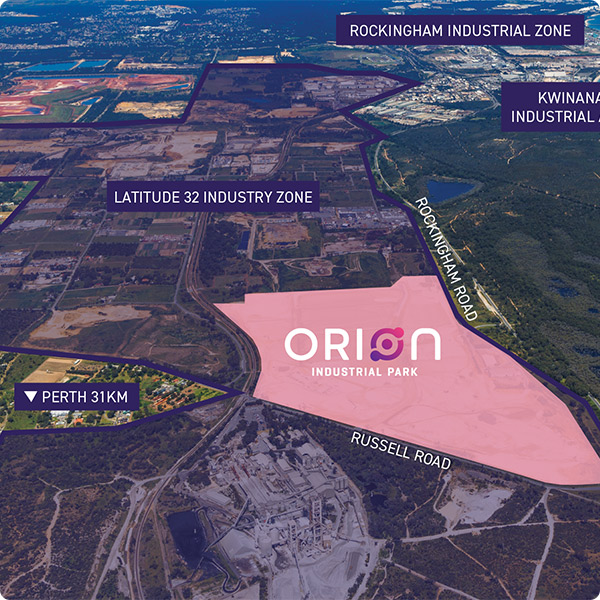
Orion Industrial Park, DevelopmentWA’s latest industrial development, is set to transform 95ha of former limestone quarries into a bustling high-quality industrial area servicing a range of industries.

The development will activate the north-western entry into Latitude 32 and combined with the Flinders Precinct, will ensure an ongoing supply of industrial opportunities in Perth’s premier industrial corridor.

Ecosystem: Orion manages all stormwater on-site, preventing any discharge into other catchments or wetlands. Estate Design Guidelines ensures the prevention of pollutants from leaching into the water table and conservation areas. Native plant species are integrated into streetscapes to reduce the urban heat island effect and maintain biodiversity corridors. Seedlings propagated from seeds collected from the local area have been used in the landscaping,

Waste: Orion reused vegetation cleared from the land as mulch on-site and repurposed clearing material from the quarry area. A comprehensive recycling system was placed for civil works materials, including metal, PVC, concrete, and concrete with steel. Furthermore, concrete is recycled into base course pavement products. New proponents are required to incorporate waste management into their designs.

Energy: Energy efficiency is achieved by mandating efficient building orientation, external shading devices, skylights and Solar PV arrays through the Estate Design Guidelines. The measures outlined in the Estate Design Guidelines lead to a 20% total greenhouse gas emissions reduction over BAU.

Materials: Roads within the estate incorporated site-won limestone subbase, recycled road base, and blending of recycled concrete and asphalt. Shell waste and topsoil material are blended and reused, and specified piping is procured from environmentally responsible sources.

Water: Orion includes waterwise landscaping, the use of bio-retention basins, and the installation of rainwater tanks for toilet flushing and irrigation systems for private lots. Water-efficient fixtures and appliances are mandated.

Community: Orion Industrial Park will generate job opportunities and support local businesses. The drainage basin has been redesigned to incorporate public amenities for local users.

Project details

Developer: DevelopmentWA

Development type: Industrial

State: Western Australia

Certification period: 2023 –

Certification:

Related projects

Find out more about EnviroDevelopment Projects in your State.

Rivermark

Rivermark

Hesperia chose to certify Rivermark under all six categories of EnviroDevelopment because of the importance of the ecology of the location and the strong interest in the community in living more sustainably.

Nestled on a quiet bend on the Swan River, Hesperia’s first masterplanned community comes to life in the heart of Viveash. On a rare parcel of land on the banks of the Swan River just 16km from Perth, Rivermark has revitalised an underutilised riverfront location. The Estate will unlock a quiet and picturesque portion of the river that has a diverse heritage and was most recently home to Midland Brick.

Reimagined riverside living is at the heart of Rivermark. A thoughtful response to the unique Western Australian landscape where good design, existing amenity and sustainability go hand in hand, residents will be offered a lifestyle immersed in their natural surroundings.

Rivermark aims to extend the established community of Viveash, with nearby amenity including schools, retail and leisure, allowing residents to have everything within easy reach.

With a commitment to achieving net zero carbon, Rivermark will incorporate a range of design and construction principles that are aligned with Hesperia’s enduring approach to sustainable development.

A sustainability focus throughout the project will be reinforced by its EnviroDevelopment 6 Leaf accreditation. Particular features include a progressive approach to renewable energy supply, widescale use of recycled materials, and an ecology led approach to landscape design of this regenerated former industrial site. Rivermark has also been endorsed by Water Corporation as a Gold Water Wise Development, achieving great outcomes in water efficiency and natural storm water management.

For more details, visit: www.rivermark.com.au

Project details

Developer: Hesperia

Development type: Residential Subdivision

State: Western Australia

Certification period: 2021 –

Certification:

Related projects

Find out more about EnviroDevelopment Projects in your State.

OneOneFive Hamilton Hill

OneOneFive Hamilton Hill

As one of DevelopmentWA’s Innovation through Demonstration projects, OneOneFive Hamilton Hill is setting new benchmarks for sustainable urban infill. Created on the site of the former 11.9ha Hamilton Hill Senior High School site, in the City of Cockburn, Perth WA, it is a future-looking development embracing the highest levels of sustainability, while creating a vibrant, thriving and connected residential community.

OneOneFive will provide up to 300 lots, offering a mix of single residential homesites, terrace homes, micro lots, and grouped housing—promoting diversity, affordability, and liveability.

OneOneFive Hamilton Hill has achieved UDIA’s EnviroDevelopment Excellence certification for its ambition and achievement across a range of sustainability initiatives. The gas-free and environmentally sensitive development also minimises waste and reduces water and energy consumption, while retaining the site’s landform, mature trees and biodiversity. Climate-responsive planning mitigates and monitors urban heat through careful material selection, shading, and water sensitive urban design initiatives designed to hydrate and cool the landscape. The development includes two hectares of high quality, inclusive public open space that is connected via retained trees, and features nature play areas, kick-about space, remnant bushland, and waterwise landscaping. A 30% tree canopy target supports shaded, walkable streets and cooler neighbourhoods. The project honours the site’s educational and Indigenous heritage through interpretive design, material reuse, street naming, and public art. Community engagement and connection with surrounding residents has also shaped project delivery, including a pocket park co-design process and a waterwise verge upgrade initiative.

OneOneFive focuses on industry advancement by demonstrating best practice resource recovery, climate resilient and water sensitive urban design, and built form outcomes. The built form responds to physical site requirements, experiments with compact lots, and promotes timber framed construction. Design Guidelines and a Waterwise Incentive Package support residents and their builders to exceed minimum regulatory sustainability standards.

OneOneFive also serves as a living laboratory for applied research to verify sustainable design. The Waterwise Exemplar project trials waterwise initiatives, documents implementation, monitors household water use and via sensors and data visualisation and communicates learnings via presentations and site tours to assist with mainstreaming. The Smart Neighbourhood Waterwise Performance Monitoring and Evaluation project includes microclimate monitoring and modelling to understand how specific materials, vegetation, density and urban layout impact urban heat. OneOneFive is also the subject for research into circular economy construction practices.

Insights from these initiatives are informing future sustainable infill developments across Perth, advancing the city’s transition toward a cooler, more resource-efficient, and resilient urban future.

Project details

Developer: DevelopmentWA

Development type: Residential Subdivision

State: Western Australia

Certification period: 2020 –

Certification:


“DevelopmentWA is proud of our OneOneFive Hamilton Hill development achieving EnviroDevelopment Excellence certification, further recognising the project’s leadership in sustainability. This independent verification confirms our commitment to innovation and sets a benchmark for sustainable urban development. By sharing the lessons learned through this project, from planning to design and implementation, we aim to help overcome challenges and encourage broader adoption of sustainability practices across urban development.”

– Dean Mudford, CEO, DevelopmentWA

Related projects

Find out more about EnviroDevelopment Projects in your State.

Catalina Estate

Catalina Estate

Comprising of three residential precincts (Beach, Central and Green) within the greater 180 hectare masterplanned community of Catalina in Perth’s northern coastal corridor which will ultimately contain ~2,400 lots and be home to approximately 6,000 residents.

Catalina is delivered by the Catalina Regional Council, formed by seven local governments to implement the development, and project managed by Satterley.  The early vision to create a more sustainable, more liveable community is being successfully delivered.

A strong focus on ecosystems led to the rehabilitation of an 11.5 hectare Biodiversity Conservation Area which provides a significant green link, including feeding habitat for Carnaby’s Black Cockatoo.  Habitat trees are also retained in road reserves and public open space.  A successful plant relocation, seed collection and fauna relocation program has been implemented, with over 550 grass trees relocated and a contribution to the seed bank that can equate to over 2 million plants.

A mandatory builders’ waste program saw well over 90% of waste by weight collected on site and recovered at a start-of-the-art facility, with the program at Catalina used as a case study for best practice waste management in WA.

Catalina, through careful design and energy and water efficiency will reduce living costs for residents and has a strong focus on community engagement and education.

For more details, visit: https://satterley.com.au/catalina/

Project details

Developer: Satterley Property Group

Development type: Masterplanned Communities

State: Western Australia

Certification period: 2018 –

Certification:

Related projects

Find out more about EnviroDevelopment Projects in your State.

Broome North

Broome North

Broome North is a coastal project located in Broome, Western Australia. The project is a stone’s throw away from the iconic Cable Beach and close enough to the amenity offered in the centre of town.

Broome North is a master planned development which consists of a range of uses including residential, retail, commercial, light industrial, educational and civic uses.

The first precinct at Broome North is now complete with features including:

  • Broome North Primary School
  • 454 residential lots
  • Climate response design and sustainability initiatives reducing energy bills by around 25% per year based on Horizon Power usage data
  • Eight parks including features such as playground, basketball court, skate park and picnic ares
  • Bike path connecting to Cable Beach and surrounds

To find out more about Broome North and Waranyjarri Estate, click here

Project details

Developer: DevelopmentWA

Development type: Residential Subdivision

State: Western Australia

Certification period: 2018 –

Certification:


Related projects

Find out more about EnviroDevelopment Projects in your State.

Vivente

Vivente

Vivente is a community with the latest in contemporary design and is located approximately 30km south of Perth within the City of Cockburn, set within Hammond Park. Defined within a beautiful natural landscape, the estate is 35 hectares and when complete will deliver a community of 500 home-sites.

Vivente has been designed to maximise the unique attributes of its surroundings. This has been achieved through creating 3.9 hectares of central parkland that features at the heart of the estate. The central parkland has been designed to be an active community focal point, to encourage neighbouring residents to meet. Boardwalks are also a key asset of the public open space and have been provided to encourage walking and community engagement.

Species planted within public open space or streetscapes are also of local provenance with approximately half being suited to Carnaby’s Black Cockatoo and other birds foraging species.

Healthy active living is encouraged throughout the estate and supported via the public open space design and infrastructure. With nearly four hectares of connected public open space designed to respect the natural topography. Notable features include:

  • A “Jacob’s Ladder” style challenge, known as the Hammond Park Climb
  • The Scramble, is one of the first Parkour courses in Western Australia designed to the new Australian Parkour Standards
  • The Cruise, completed in June 2022, is a 1.49-kilometre at-grade walking and running track.

These parks address the need for quality recreational space, particularly in response to contemporary dwellings having less active private open space when compared to traditional inner Perth suburbs. The POS also optimises community creation and activity through valued, well-used parkland. Vivente’s leadership is also reflected in its achievement of EnviroDevelopment accreditation and the Heart Foundation’s Healthy Active by Design accolade.

For more details, visit www.Viventeliving.com.au

Project details

Developer: Gold Estates Holdings Pty Ltd

Development type: Residential Subdivision

State: Western Australia

Certification period: 2018 –

Certification:

Related projects

Find out more about EnviroDevelopment Projects in your State.