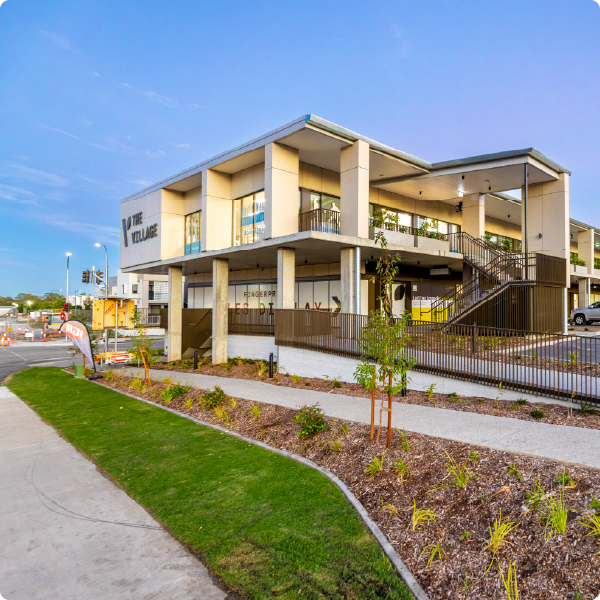
Sustainability was embedded into the project from the outset, with a focus on creating a development that supports both environmental performance and community engagement. In addition to 99 kW rooftop solar photovoltaic system, Passive design principles, natural light optimisation, and ventilation strategies were incorporated to improve occupant comfort while reducing reliance on mechanical systems and operational energy.
The project also prioritised efficient resource management through sustainable material selection and construction methodologies aimed at reducing waste and improving site efficiency. Landscaping and public realm design contributed to enhanced amenity, urban cooling, and a more pedestrian-friendly environment through reduced hardstand, irrigated garden beds and shaded pedestrian zones.
With its emphasis on community and social sustainability, the precinct was designed to encourage community interaction through activated public spaces, walkability, and integrated lifestyle offerings. The development promotes accessibility, connectivity, and reduced dependence on vehicle travel. Retail tenancies and public spaces have been designed to encourage visibility, interaction, and pedestrian safety. Active frontages, well-lit pathways, and integrated public areas enhance natural surveillance, supporting social connection creating welcoming spaces for rest and recreation.
The Village at Carseldine stands out for its holistic approach to sustainability, integrating environmental, social, and economic considerations into every stage of the project. Rather than treating sustainability as a standalone initiative, the development demonstrates how responsible design and construction can create enduring value for both the community and the built environment.
As Brisbane continues to grow, The Village at Carseldine represents a benchmark for contemporary mixed-use development in Queensland, showcasing how thoughtful urban planning and sustainable delivery can positively contribute to community wellbeing and future city growth. Achieving the certification was important because it demonstrates a commitment to creating a development that delivers long-term value beyond construction. The focus on connectivity, safety, and sustainable design helped create a more resilient and people-focused environment for residents and visitors.